
We’ve all been there. Staring at a blank screen, trying to come up with social content that actually resonates, while keeping up with whatever the algorithm wants this month.
It’s a lot. But it’s worth the effort. Over 5.6 billion people worldwide are active on social media today, and for a lot of your supporters, it’s where they’ll first hear your name, watch your story, or decide to give. Look at how a single Humans of New York post can turn one person’s story into a campaign that raises millions in days. Or how Movember turns something as simple as growing a mustache into a global conversation about men’s health every single year. Even a small shelter’s rescue video taking off on TikTok can turn into an overnight wave of donations.
When the right story catches on, it can build momentum far beyond what any single post could do on its own. So how do you actually harness that, without it eating your whole week? That’s where having a real social media strategy for nonprofits comes in. Let’s walk through how to plan smarter, tell better stories, and build a content approach that holds up campaign after campaign.
Key takeaways
- Storytelling beats posting updates. Shift from “here’s what happened” to “here’s what it felt like” and people stop scrolling and start paying attention.
- A little planning goes a long way. Map your year, flag key dates like GivingTuesday, and batch your posts to keep your feed consistent without eating up your week.
- Video is your highest-converting content. It builds trust faster than any caption, so when you’re deciding what to post, ask if it can be a video first.
The Importance of Storytelling
A good story moves people. When you shift your mindset from “posting updates” to “telling stories,” your content stops feeling like an announcement and starts feeling like an invitation to be part of something.
Setting Goals and Identifying Your Audience
Before you write a single post, get clear on what you actually want your social media to accomplish. A few common goals:
- Increasing donor engagement. Building a following that actually talks back, comments, shares, and shows up.
- Expanding your donor base. Reaching new people who align with your mission but haven’t found you yet.
- Hitting a specific fundraising goal. Rallying support around a campaign, event, or urgent need.
These goals aren’t mutually exclusive. Most nonprofits are working toward a mix of them at once. The key is picking clear, measurable objectives so you know what “working” actually looks like.
Know Who You’re Talking To
Once your goals are set, get specific about who you’re trying to reach. Understanding your audience shapes everything from your tone to your platform choice.
A quick look at where people spend their time these days:
- Facebook still has the largest reach of any platform, with more than 3 billion monthly users. It tends to skew toward an older audience, making it a strong fit for reaching established donors.
- Instagram has around 3 billion monthly users as well, with the largest age group landing in the 25 to 34 range. It’s a strong fit if you’re trying to reach younger donors and rely heavily on visuals.
- LinkedIn has grown past 1.3 billion members worldwide. It’s the place for reaching corporate donors, professionals, and potential partners who want to see your organization’s credibility and impact.
These numbers shift every year, so it’s worth a quick gut check on your own platform performance every so often rather than assuming last year’s plan still fits.

Free download
The Complete Guide to Storytelling for Nonprofits
Tell stories that move people to give. A practical guide to nonprofit storytelling — finding, shaping, and sharing the stories that drive donations.
Building Out Your Content Calendar
Consistency is what makes a social strategy actually work. Planning your content in advance keeps your presence steady and helps you tie your messaging to key moments, like GivingTuesday or your year end push, so you can ride that wave instead of scrambling to catch up with it.
To build a solid calendar, keep these in mind:
- Define clear goals for each campaign or stretch of time, whether that’s raising a specific amount, bringing in new donors, or building buzz for an initiative.
- Map out your campaign timelines, breaking each one into phases with specific actions attached.
- Flag your critical dates, like GivingTuesday, relevant holidays, or awareness days tied to your cause.
- Mix up your content types by blending storytelling, visuals, video, testimonials, and calls to action so your feed doesn’t feel repetitive.
- Set aside real time to engage, not just post. Replying to comments and messages is where a lot of trust actually gets built.
Start With a Year Overview
Zoom out first. Map your whole year before you get into the weeks and months. It can be helpful to plan themes throughout the year and mark important dates in the calendar. Tools like Buffer and Hootsuite make it easy to jot down ideas as you think through your content.
Pro Tip
Buffer has a free plan and a nonprofit discount if you need more functionality!
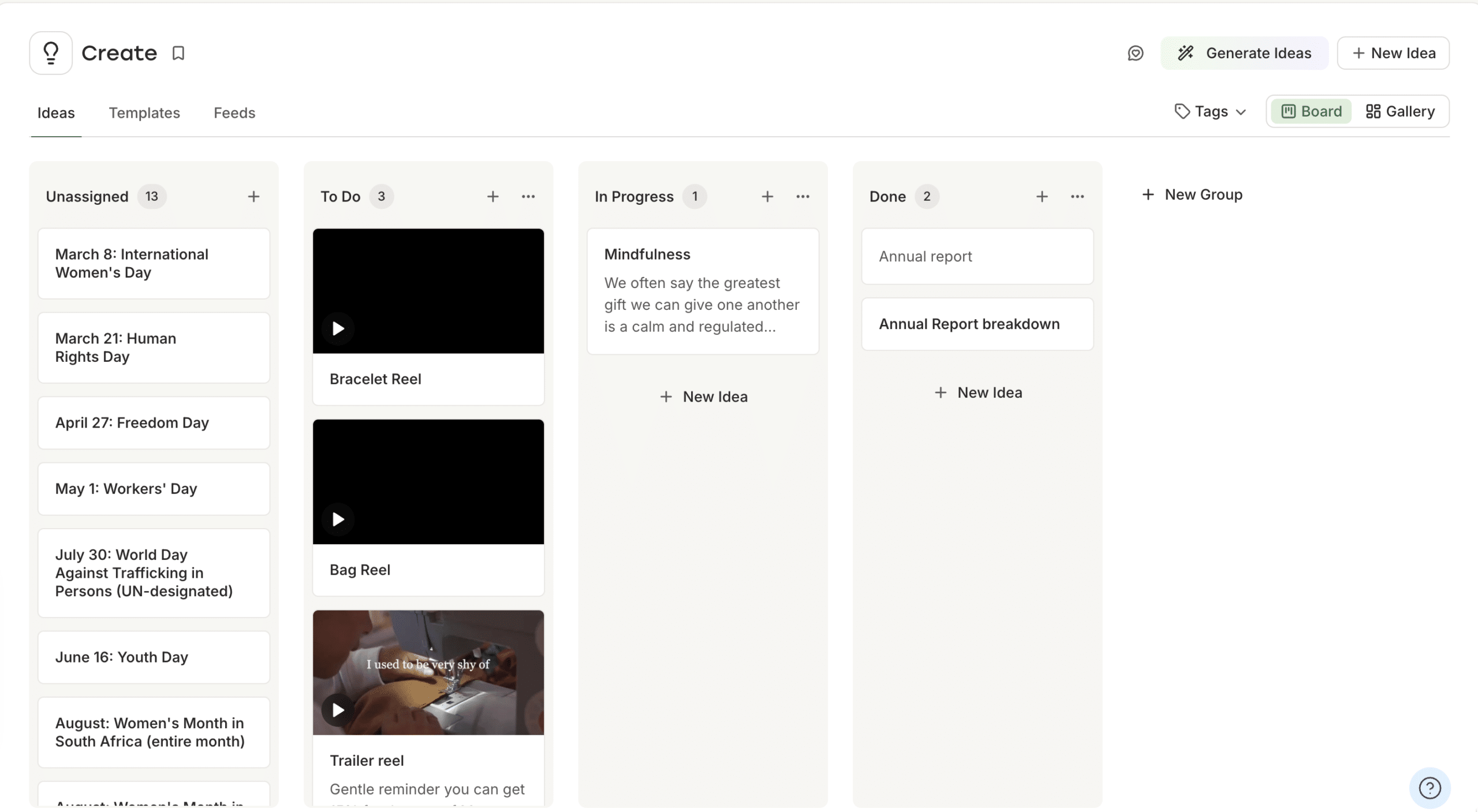
Idea board on Buffer to help you organize your content plan and ideas.
Part of that overview should include “warm up” stretches, often starting in February and again in August, where you’re not making a financial ask at all. Instead, you’re building the relationship: sharing the problem you’re solving, showing your impact, and inviting smaller actions like a follow or a newsletter signup. That groundwork is what makes your bigger asks land later.
Once your year is mapped, break it down by month, and then by post: subject, summary, and call to action for each one.
Organize With Content Buckets
Group your content into a few clear buckets so your feed stays balanced:
- Entertain: Lighter content, like a fun video or a quiz, that still connects back to your mission.
- Inspire: Success stories, powerful quotes, or moments that show real impact.
- Introduce: A staff member, a volunteer, or a behind the scenes look at your work.
- Inform: Share something educational, like a simple infographic or an update on your field.
- Interact: Ask a question, run a poll, invite comments. Give people a reason to respond.
- Update: Keep supporters in the loop on campaign progress or upcoming events.
- Call to action: Give people a clear next step, whether that’s giving, sharing, or signing up.
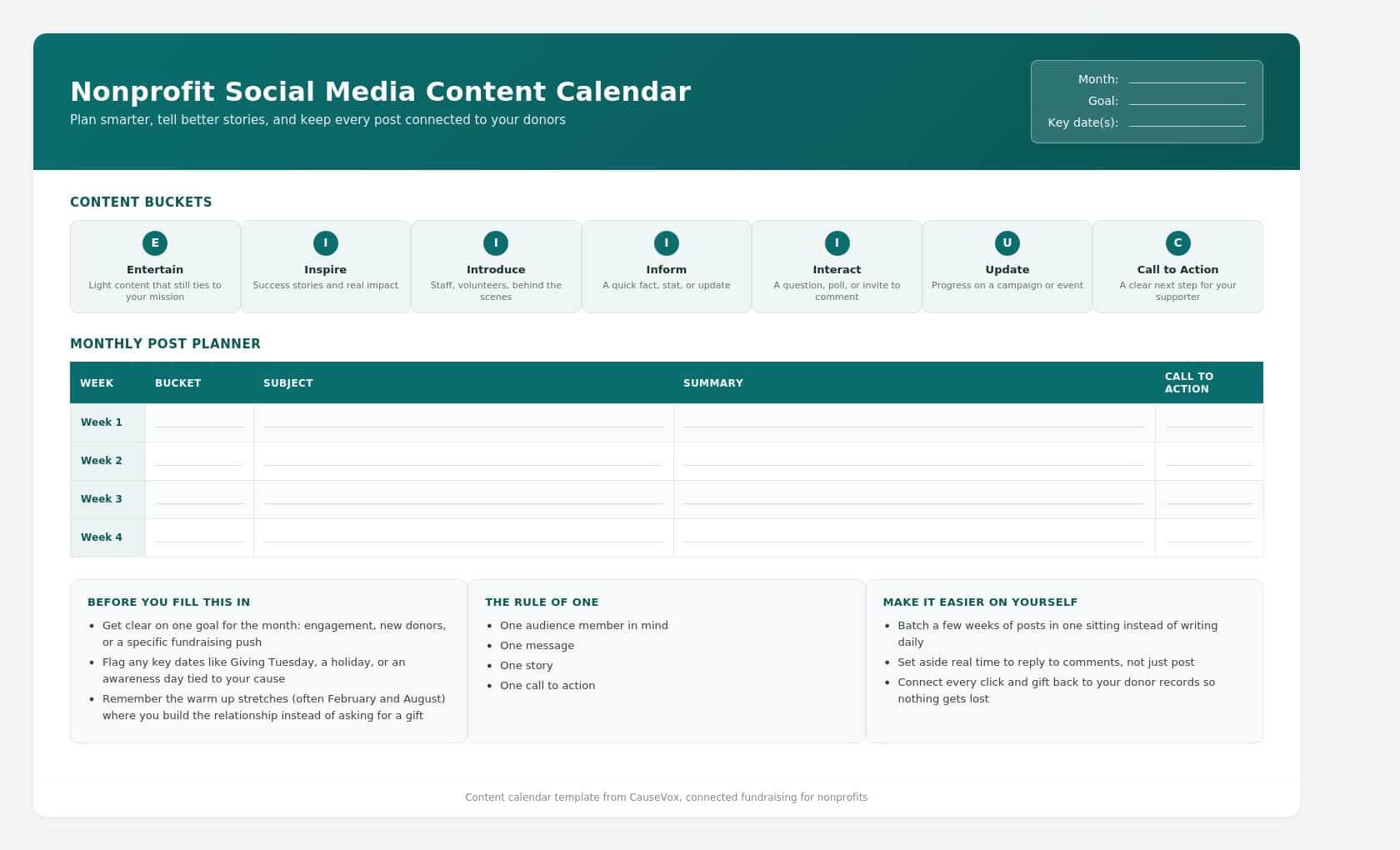
Sample monthly content planer
Make Batching Your Friend
Set aside dedicated time to write and schedule a batch of posts at once instead of writing something new every single day. It’s a small shift that saves a surprising amount of time and keeps your calendar feeling manageable instead of constant.
A social media planning tool (like Buffer, Hootsuite, or Meta) allows you to schedule content across multiple platforms that will be posted automatically. You can also see exactly what it will look like on your feed.
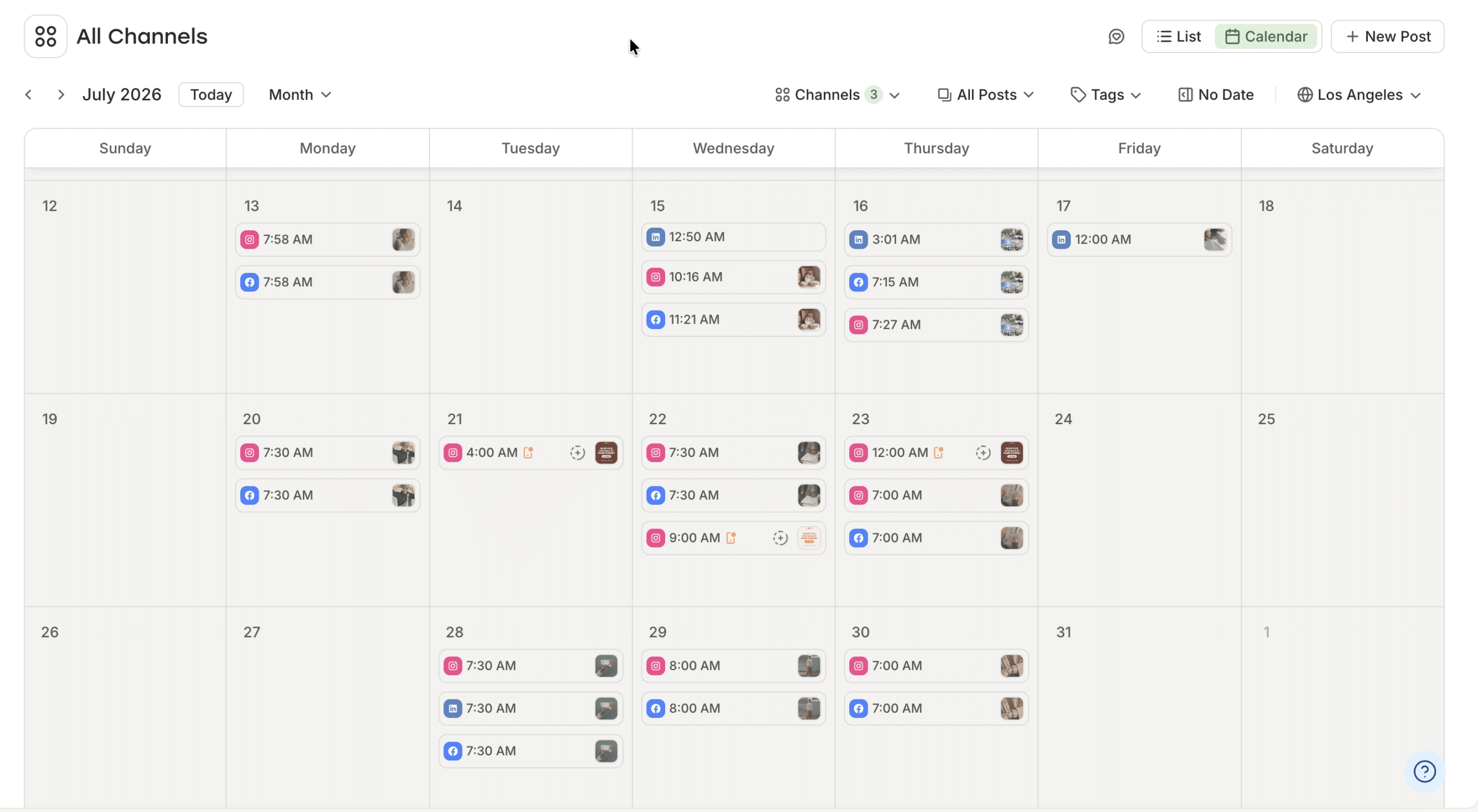
Buffer content calendar view
Connecting Content To Donor Data
As you plan and publish content, the real value comes from connecting what happens on social media back to your donor data. When someone clicks through from a post, fills out a form, or makes a gift, that action should land in the same place as the rest of their history with you, not get stuck in a separate tool. That’s the difference between a post that gets a like and a relationship that keeps building.
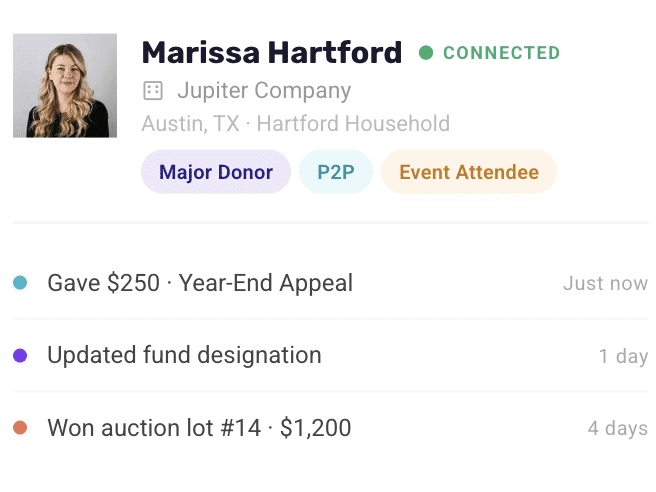
See the full picture of your donor’s history and engagement in one place with CauseVox’s CRM.
Developing Your Content Strategy
Before you post anything, get clear on your buckets: impact stories, behind-the-scenes, stats, program highlights. These are your raw materials. But raw materials alone don’t move people. What turns a good post into a great one is a story arc: introduce a problem, let people feel it, show what changes, and end on hope.
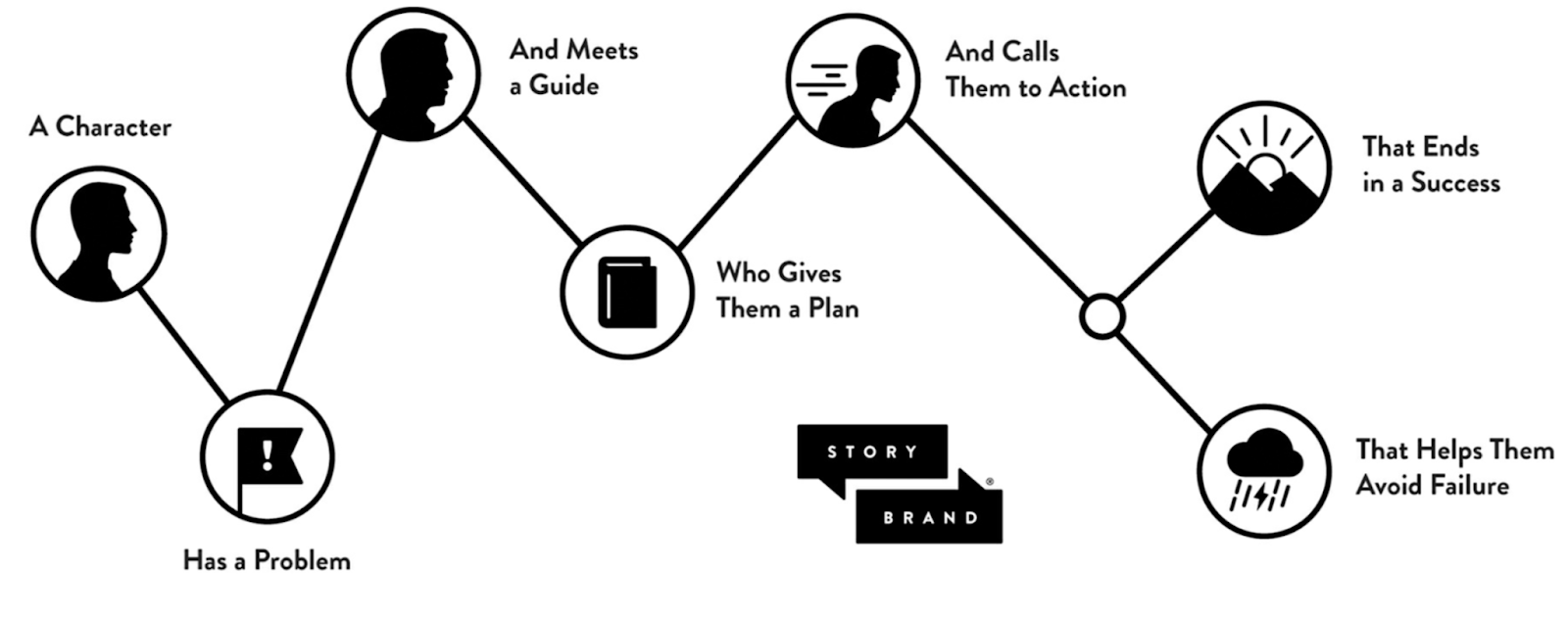
StoryBrand framework that helps you position your donor as the hero.
The Marketing Rule of One
Whatever you’re creating, whether it’s a single post or a whole campaign, try to stick to:
- One audience member in mind
- One message
- One story
- One call to action
Trying to say everything to everyone usually means saying nothing clearly. Keep it simple, keep it focused, and always give people something specific to do next.
Use a Mix of Content
Compelling content usually pulls from a few different angles:
- Impact stories that show donors exactly what their support makes possible.
- Strong visuals that capture your cause and the people behind it.
- Video that tells a story, shows your work in action, or features a real testimonial.
- Social proof, like a quote from a donor or volunteer, that builds credibility.
Video Is Your Most Powerful Tool
If you take away one thing from, make it this: video outperforms almost everything else. It stops the scroll. It builds trust faster than a caption ever could. And it consistently gets the most engagement across every platform.
You don’t need a production team or perfect lighting. What you need is authenticity. People aren’t looking for perfection. They’re looking for real.
So when you’re pulling from your content buckets, ask yourself: can this be a video? Behind-the-scenes moments, program highlights, even stats, almost anything can come to life on camera. Show the hands doing the work. Show the real reactions. Let people see the story, not just read about it.
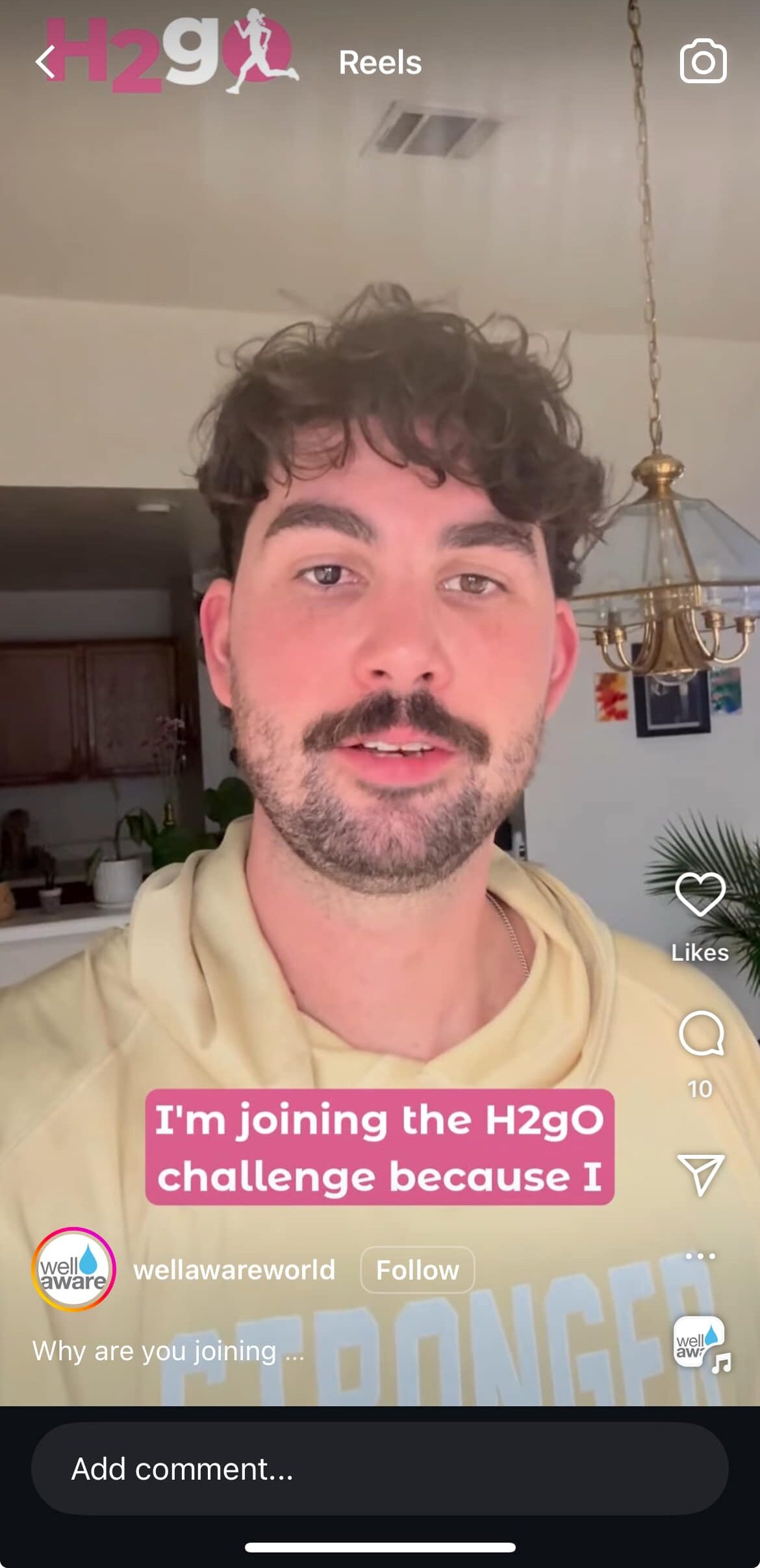
Well Aware encouraged peer-to-peer fundraisers to use Instagram Reels to share why they were getting involved in their H2gO campaign.
Work Smarter, Not Harder
You don’t need to create new content for every channel. Repurpose what’s already working, turn a high-performing Instagram caption into an email intro, or pull the story from a video into your next newsletter. Your social content has already done the work of finding what resonates; let it do double duty in your inbox.

Send targeted emails based on content performance with CauseVox
Ethical and Trauma-Informed Storytelling
Telling real stories means handling real people’s experiences with care. A few things worth keeping in mind: People don’t owe you their story just because your organization has supported them.
Consent has to be full, informed, and enthusiastic, and people should be able to withdraw their story at any time, even after it’s been shared. It’s also important to give space after someone’s story reaches a hopeful place before asking them to share it publicly, rather than rushing to capture it.
Involve the staff who work directly with the people you serve, and build an actual process for gathering stories rather than winging it. And throughout the process, give people real control: the option to reschedule, pause, or stop a conversation without any pressure.
You can be honest about the challenges your organization exists to solve without exploiting someone’s pain to make the point. Respecting the person behind the story is what makes the story trustworthy in the first place.
Bring It Back to Your Donors
A great social media strategy doesn’t live in a vacuum. It’s most powerful when it’s connected to the rest of how you fundraise. When your social content, your campaign pages, and your donor records all live in one connected system, you get a full picture of your supporter, instead of getting insights scattered across a handful of disconnected tools.
Ready to bring your storytelling and your fundraising data together? Get started for free with CauseVox.