

If you’ve been in the nonprofit world for a while, you’ve probably heard the acronym “DAF” tossed around at conferences or in fundraising newsletters. But if you’re not totally sure what donor-advised funds are or why they matter for your organization, you’re not alone.
Donor-advised funds for nonprofits are one of the most powerful (and most underused) tools in the philanthropic space, and once you understand them, you’ll wonder why you didn’t start paying attention sooner!
What Are Donor-Advised Funds for Nonprofits?
A donor-advised fund is essentially a charitable giving account. A donor contributes money (or other assets like stocks or real estate) into the fund, gets an immediate tax deduction, and then recommends grants from that fund to nonprofits over time.
Think of it like a savings account, but specifically for giving. The donor puts money in when it makes financial sense for them, and then they direct gifts to the causes they care about on their own timeline.
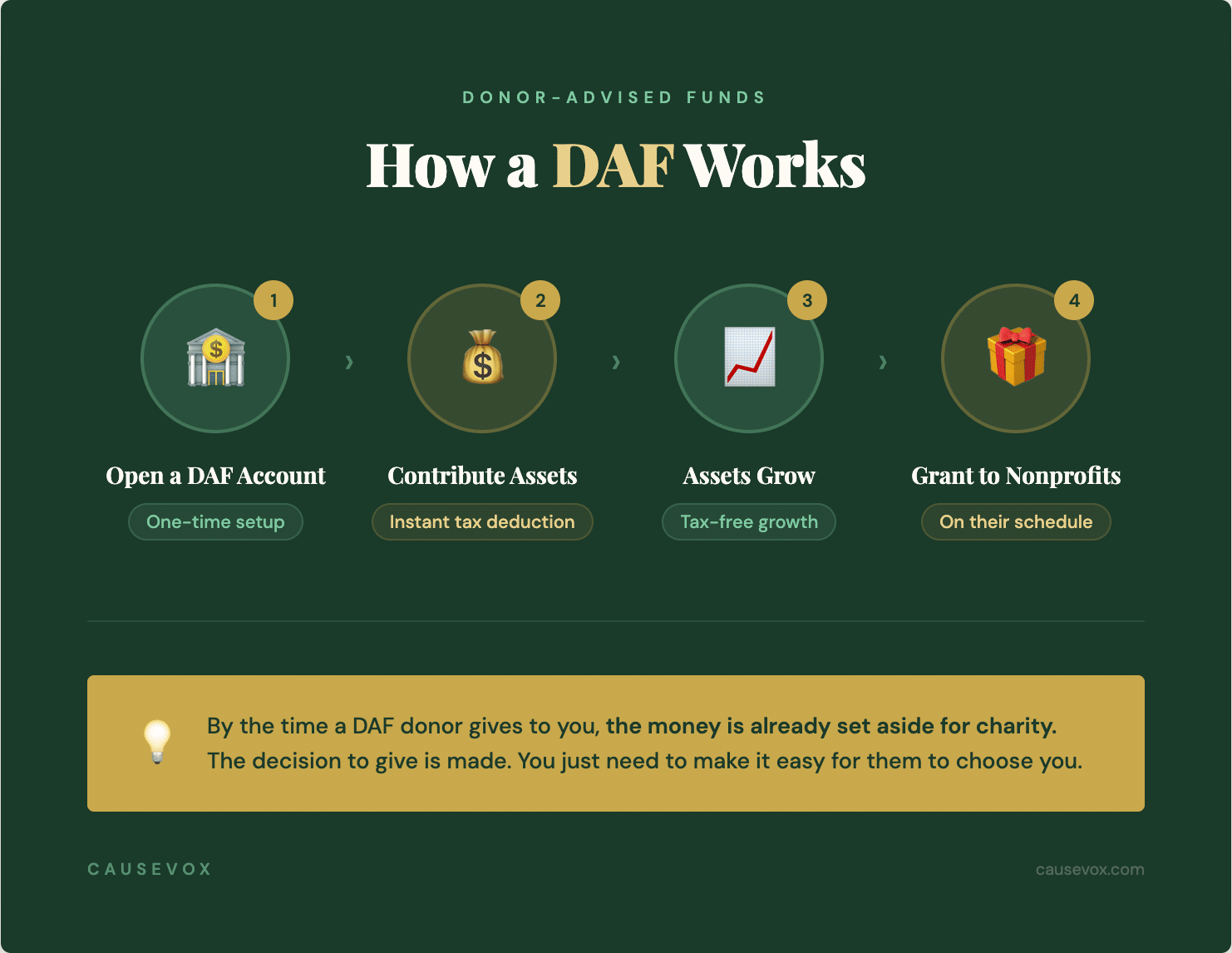
Donor-advised funds are managed by “sponsoring organizations,” which are typically community foundations, financial institutions like Fidelity or Schwab, or faith-based foundations. These sponsoring organizations handle all the administrative and legal work, which makes DAFs surprisingly simple for donors to use.
For instance, imagine a donor named Maria has a great year financially and wants to reduce her taxable income. She contributes $20,000 to her donor-advised fund in December, gets the tax deduction right away, and then spends the next two years thoughtfully recommending grants to organizations she loves, including yours. It’s a win for her financially, and it’s a win for the causes she cares about.
Why Are Donor-Advised Funds Such a Big Deal Right Now?
Donor-advised funds have been around since the 1930s, but they have exploded in popularity over the last decade. According to the National Philanthropic Trust, there are now over 1.9 million individual DAF accounts in the United States, holding hundreds of billions of dollars in charitable assets!
That is a lot of money sitting in accounts specifically designated for giving to nonprofits. And a significant chunk of it could be heading toward organizations just like yours.
One reason donor-advised funds have grown so quickly is that they are genuinely useful for donors. They allow people to give appreciated assets (like stock that has gone up in value) and avoid capital gains taxes. They simplify charitable giving at tax time. They let families create a shared giving practice across generations. And they make it easy to support multiple organizations without writing a dozen separate checks.
From a purely practical standpoint, donor-advised funds remove a lot of the friction that gets in the way of giving. When it’s easy to give, people give more.
Why Donor-Advised Funds Matter for Your Nonprofit
Here’s where things get really interesting for fundraisers.
Donors who use donor-advised funds tend to give more generously than average donors. Research from Fidelity Charitable has found that DAF donors give significantly more to charity overall compared to donors who don’t use a DAF. When someone opens a donor-advised fund account, it often signals a deeper commitment to philanthropy, not just a one-time gift.
Grants from donor-advised funds also tend to be larger than typical individual gifts. Because donors have already set aside the money specifically for charitable purposes, they’re not weighing whether they can “afford” to give. The decision to give has already been made. The only question left is where.
That means if you can position your organization in front of DAF donors, you have a real shot at larger, more intentional contributions.
How Nonprofits Can Start Attracting Donor-Advised Fund Gifts
You don’t need to overhaul your entire fundraising strategy to start benefiting from donor-advised funds. A few simple steps can open the door.
1. Make It Easy To Give Via A Donor-Advised Fund
Many donors don’t realize their favorite nonprofits accept DAF grants, or they’re unsure how to initiate one.
Add a short note to your donation page explaining that you accept donor-advised fund gifts, and include your organization’s EIN (Employer Identification Number), which donors will need when recommending a grant from their fund.
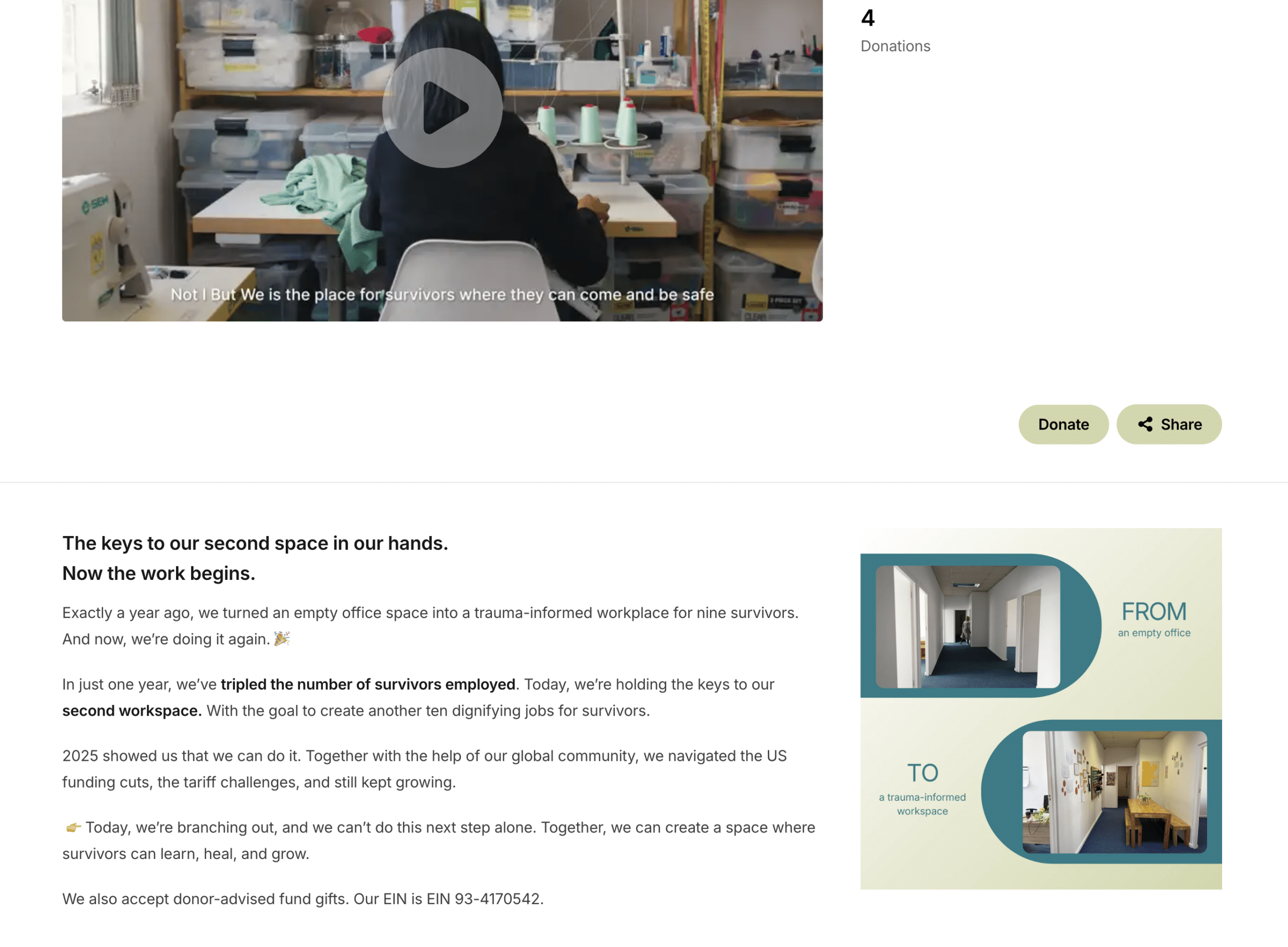
Make it clear your organization accepts DAF’s on your donation page.
2. Mention Donor-Advised Funds In Your Donor Communications
You don’t need to dedicate an entire email newsletter to the topic. A single line in a year-end appeal, something like “Did you know you can recommend a grant to us directly from your donor-advised fund?” can plant a seed with donors who already have DAF accounts.
3. Identify Your Existing DAF Donors
Some donors are already sending your nonprofit donor-advised fund grants without much connection to your organization.
Look for gifts that come through Fidelity Charitable, Schwab Charitable, or similar sponsoring organizations. Those donors are worth cultivating. Reach out, thank them personally, and build the relationship.
4. Talk To Your Major Gift Prospects
If you’re having conversations with donors who are considering a larger gift, donor-advised funds are worth bringing up. For donors who are charitably inclined and financially savvy, a DAF might be a natural fit that makes a bigger gift much easier for them to execute.
A Few Things Nonprofits Should Know About DAFs
Donor-advised fund gifts do come with some nuances worth knowing. Because the sponsoring organization technically owns the assets in the fund, the donor is technically making a “recommendation,” not a direct gift. In practice, grants are almost always approved as requested, but it does mean there’s a middleman involved in the process.
Donor-advised fund grants also can’t be used to fulfill personal pledges or to receive goods and services in return (i.e. no gala tickets paid for with DAF funds). For most standard charitable giving, this isn’t a problem, but it’s good to have clarity when you’re talking with donors.
One more nuance worth noting: because donors take their tax deduction when they fund the DAF (not when they recommend a grant) your organization is not required to provide a tax receipt for DAF gifts. The sponsoring organization handles that documentation.
That said, sending a warm acknowledgment is still best practice for relationship-building. Just make sure your receipt language is accurate: avoid stating that “no goods or services were provided in exchange” in a way that implies tax deductibility, since the donor’s deduction has already been handled elsewhere.
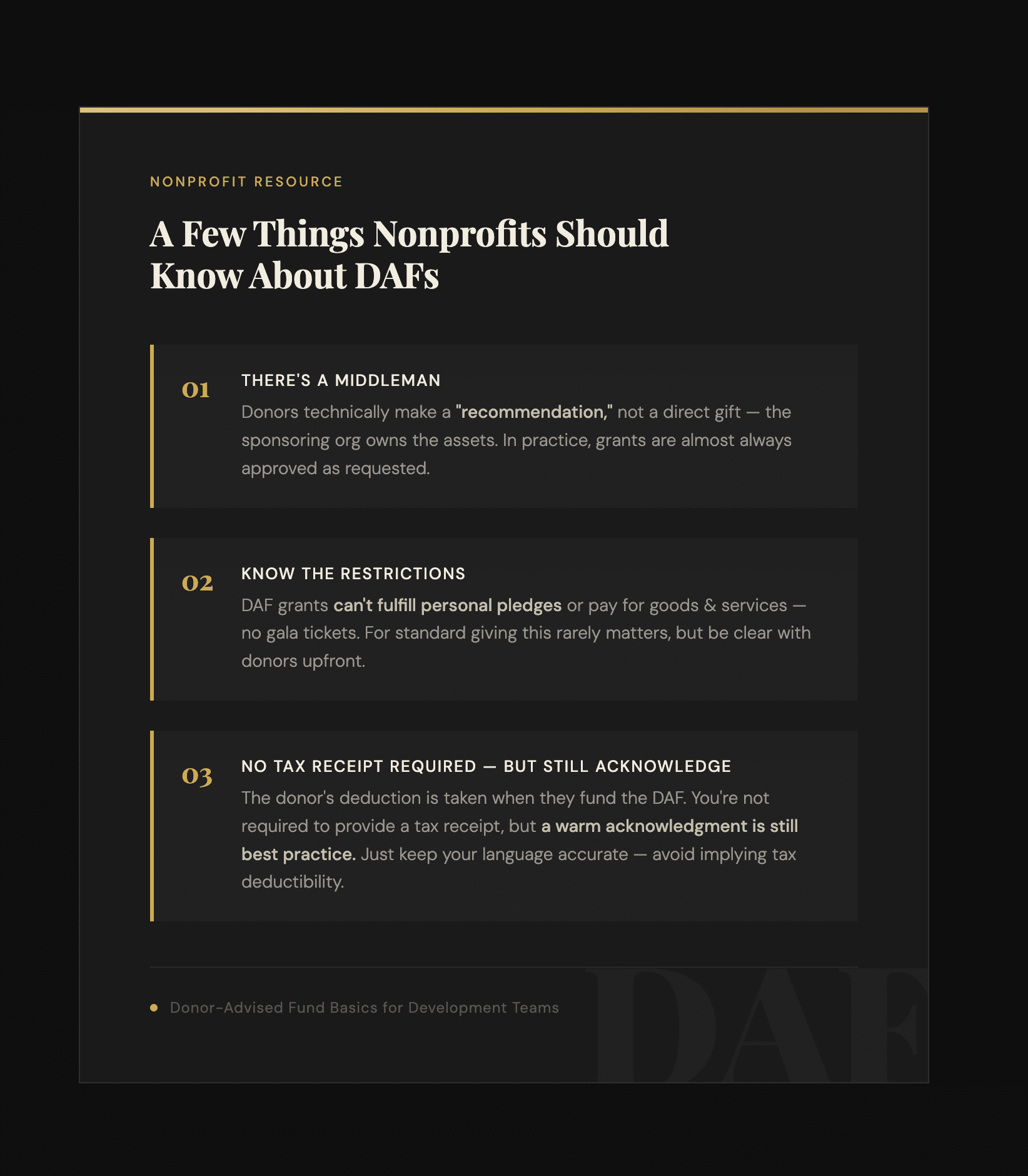
3 key things your nonprofit needs to know about DAFs.
The Bottom Line on Donor-Advised Funds for Nonprofits
Donor-advised funds represent a massive and growing pool of charitable dollars. They are used by some of the most committed philanthropists in the country, and they make it genuinely easier for people to give more generously over time.
For nonprofits, the opportunity is real. You don’t have to be a large institution or have a dedicated major gifts team to start tapping into donor-advised fund giving. You just need to make your organization easy to find, easy to give to, and worth investing in.
Start simple. Add a line to your donation page, mention donor-advised funds in your next appeal, and keep an eye on where your gifts are coming from. The donors who are already giving through DAFs might be your best partners for the long haul.
Get started building your donation page with CauseVox today!